Capabilities International forwarding
Origin to destination. Border to border.
Bidirectional global freight forwarding through PANYNJ container terminals, JFK and EWR air cargo, and direct relationships at every major origin port worldwide.
The thesis
Forwarding is paperwork. Done well, paperwork is leverage.
The freight moves at the speed of the documentation.
International freight forwarding is the discipline of getting a shipment from origin to destination across jurisdictional borders, regulatory regimes, customs systems, and documentation standards. The freight itself moves on ships and planes — the work is in the paperwork that lets it move legally.
ISF filings before vessel departure. AES / EEI exports. HS classification. Certificate of Origin. Commercial invoices in the language and format the destination port expects. Duty calculation. Free-trade-zone routing where it saves money. Customs entry filings that don't get held in secondary inspection. Done poorly, this is where freight gets stuck for days. Done well, this is where competitive advantage lives.
We coordinate it across PANYNJ marine terminals (Port Newark, Elizabeth, Howland Hook, Red Hook), JFK and EWR air cargo, and direct relationships at major origin ports — Shanghai, Rotterdam, Antwerp, Felixstowe, Singapore, Hamburg, Yokohama, Busan, Algeciras, and beyond. In-country customs partners on every continent, so destination-side clearance happens without a coordination gap on arrival.
The container moves on the vessel. The shipment moves on the paperwork.
The catalog
Three services. Every border, every regime.
Cross-border logistics and trade compliance — bidirectional, between NYC and any port in the world.
-
Bidirectional global freight movement
Import / Export
Bidirectional global freight movement coordinated through PANYNJ container terminals (Port Newark, Elizabeth, Howland Hook, Red Hook), JFK / EWR air cargo, and direct origin-port relationships at major global terminals — Shanghai, Rotterdam, Antwerp, Felixstowe, Singapore, Hamburg, Yokohama, Busan, Mumbai, Algeciras, and beyond.
For imports: vessel routing through PANYNJ, drayage to NYC-metro warehouses or transload to inland-bound trailers. For exports: consolidation at NYC-metro origin facilities, vessel booking at PANYNJ, documentation through the NewYork3PL forwarding desk. Same accountable team handles both directions on the same account, so an importer who later exports doesn't restart the relationship with a different vendor.
Common use cases: Apparel brand importing from Bangladesh through Singapore consolidation hub. Pharmaceutical manufacturer exporting to European Union destinations through Rotterdam and Antwerp. Beauty brand importing from European labs and exporting to Asian retail accounts on the same supply chain.
-
Documentation, classification, compliance
Customs clearance & brokerage
HS classification, entry filing, ISF / AMS, AES / EEI, duty calculation, free-trade-zone routing where it saves money, Certificate of Origin preparation, commercial invoice formatting for destination compliance, and the customs entry documentation that determines whether a shipment clears in 24 hours or sits in secondary inspection for a week.
Misclassification is the most common forwarding failure and the most expensive. A wrong HS code can mean overpaying duties by 15-30 percent on every shipment for years, or worse — getting flagged for customs audit and paying retroactive penalties. We classify carefully, route through FTZs where the cost arithmetic supports it, and maintain in-country customs partners on every continent so destination clearance doesn't become a coordination gap on arrival.
Common use cases: Importer needing HS reclassification audit on a current SKU set to recover overpaid duties. Multi-country exporter requiring destination-port-specific commercial invoice formatting. Trade-compliance-sensitive client routing through FTZ to defer or eliminate duty exposure on inventory awaiting domestic sale.
-
Specialized lift for non-standard cargo
Vessel & aircraft chartering
For high-volume shipments, time-critical cargo, or specialized freight where commercial scheduled service is insufficient: full-vessel ocean charter, partial-vessel arrangements, and aircraft charter through trans-Pacific and trans-Atlantic operator relationships.
When chartering makes sense: a shipment large enough that scheduled vessel rates compound badly (full charter often costs less than per-container rates above a certain volume threshold). A shipment time-critical enough that the next available scheduled departure is unacceptable. A cargo class that doesn't fit standard scheduled-service parameters — oversize, overweight, hazardous, or requiring dedicated airframe routing. We run the cost arithmetic against the charter option and recommend it when the math actually supports it.
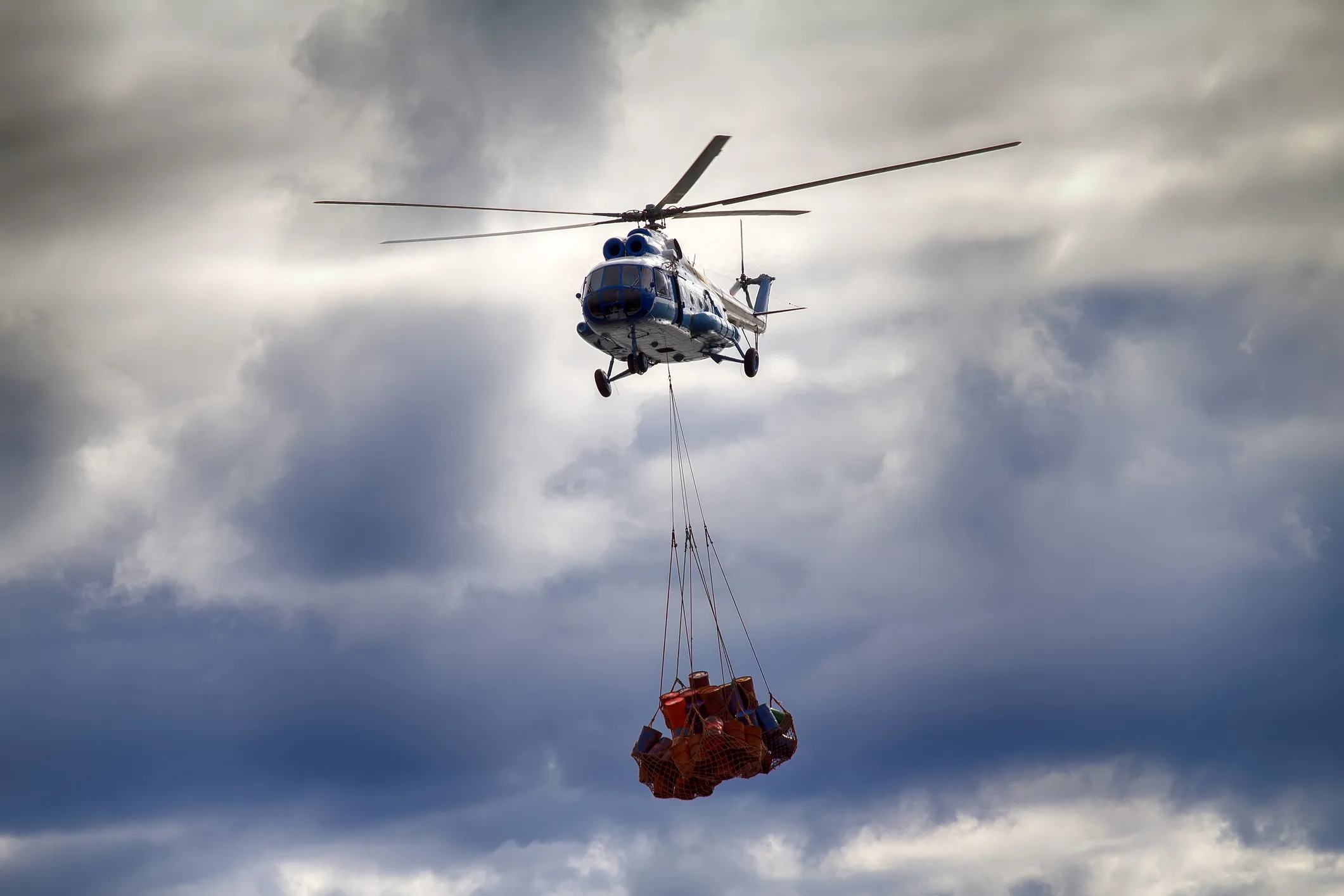
Common use cases: Manufacturer with a project shipment too large for scheduled ocean service — charter vessel from Hamburg to Port Newark for a single-shot delivery. Time-critical pharmaceutical shipment requiring chartered freighter from Asian origin to JFK with no scheduled service available in the window. Oversize industrial equipment requiring helicopter or specialized-airframe lift to a remote installation site.
The infrastructure
Four marine terminals. Two airports. Direct relationships at every major origin port.
-
4 marine terminals
Port Newark, Elizabeth, Howland Hook, Red Hook — at the Port of NY/NJ
-
2 air cargo airports
JFK and EWR for trans-Pacific and trans-Atlantic air freight
-
10+ origin ports
Direct relationships at Shanghai, Rotterdam, Antwerp, Felixstowe, Singapore, Hamburg, Yokohama, Busan, Algeciras, and beyond
The Port of New York and New Jersey aggregates four marine terminals across Newark, Elizabeth, Staten Island, and Brooklyn. Each terminal handles different vessel classes, different carrier rotations, and different intermodal connections. Choosing the right terminal for each shipment is a forwarding decision — not a default.
The same thinking applies origin-side. We work with carriers and forwarding partners at the world's major commercial ports, so a shipment originating in Shanghai or Rotterdam or Algeciras gets coordinated end-to-end through a single accountable team rather than handed off across a chain of brokers. Customs documentation is prepared at origin to the destination's specifications, so the entry filing on this side doesn't get held for missing paperwork.
The destination port doesn't care where the freight came from. It cares whether the paperwork is in order.
Brief us on the route
Tell us where it starts and where it crosses. We'll handle the borders.
Origin port, destination port, cargo description, regulatory regime. We'll come back with the route, the documentation plan, and the customs strategy.