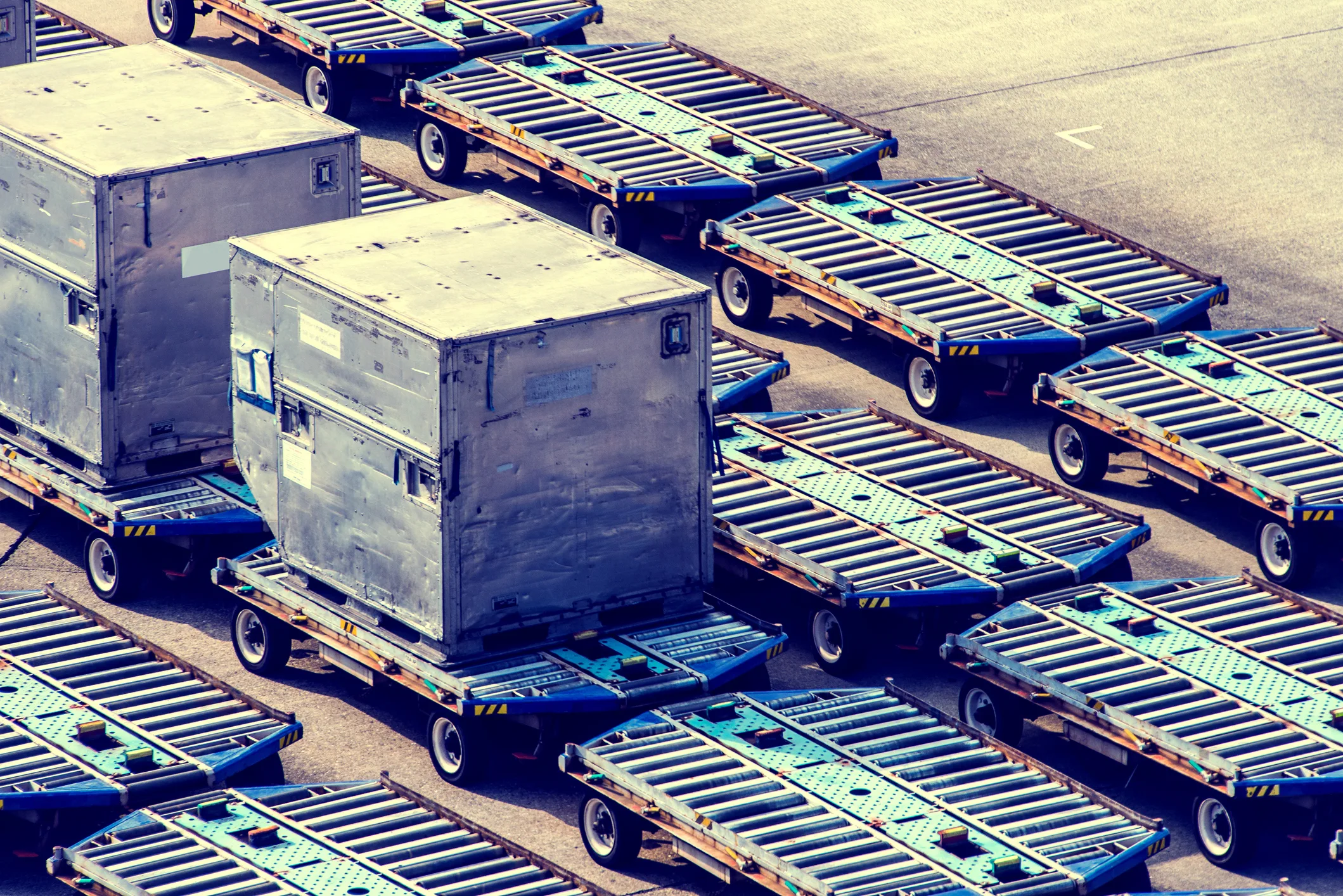
Capabilities Transportation
Every mode. Every lane. One accountable team.
Truck, rail, air, last-mile, multi-mode coordination — orchestrated as a single operation, not a chain of vendor handoffs.
The thesis
Mode is a freight decision. Not a budget convenience.
Most 3PLs sell capacity in their primary mode and outsource the rest.
If the call is to a trucking firm, the answer is trucking — even when the freight should ride rail for the long haul and truck only for the last hundred miles. If the call is to an air-cargo broker, the answer is air — even when the freight isn't time-sensitive enough to justify the spend.
NewYork3PL maintains carrier relationships across every mode the freight might need: full-truckload, less-than-truckload, full-container ocean, less-than-container ocean, intermodal rail through CSX Kearny and Norfolk Southern North Jersey, air cargo through JFK and EWR, last-mile across the five boroughs and Northern New Jersey. The mode decision happens shipment-by-shipment, driven by what the cargo actually needs.
A multi-mode shipment — origin to drayage to intermodal rail to regional truck to last-mile — gets coordinated as a single operation, not a chain of separate vendor relationships with handoff gaps where freight gets lost or delayed.
The mode is the math. The math decides the lane.
The catalog
Three services. One coordinated lane.
Moving the freight from origin to destination — by whatever combination of modes the job actually needs.
-
Multi-mode carrier coordination
Transportation & freight management
Full-truckload (FTL), less-than-truckload (LTL), full-container-load (FCL), and less-than-container-load (LCL) capacity across a vetted carrier network. Regional Northeast trucking partners, Class I intermodal partners (CSX, Norfolk Southern), and air cargo capacity at JFK and EWR with the major scheduled passenger and freighter operators.
Rate optimization and lane analysis included as the default posture, not a premium tier. We track your actual lane history, your seasonal volume curves, and your destination mix — then shop the carrier set against that history rather than pulling a generic spot-rate quote and hoping it lands close.
Common use cases: Importer running Asia-to-Northeast with seasonal Q4 volume spike. National DTC brand with consistent weekly truck volume across the Mid-Atlantic. Manufacturer needing time-critical air cargo capacity from European origin to JFK three times a quarter.
-
Five-borough cost mathematics
Last-mile delivery
Five-borough parcel, courier, and white-glove delivery designed around Manhattan permit windows, building-access protocols, and the borough-by-borough cost mathematics that determines whether a 6 p.m. SLA is achievable or aspirational. Includes appointment-based delivery, signature-required, and white-glove inside-delivery service tiers.
NYC last-mile is not a uniform service area. Manhattan delivery requires permit-window awareness, doorman-building protocols, and freight-elevator scheduling. Bronx and Queens delivery are cost-mathematics-driven — every additional mile per stop compounds across hundreds of stops per route. Brooklyn last-mile is rapidly densifying with industrial real estate that supports same-day staging. We work the borough-specific economics into the routing decision.
Common use cases: DTC subscription brand running same-day NYC-local fulfillment. Furniture company needing white-glove inside-delivery to Manhattan high-rises. B2B distributor with daily replenishment SLAs to Bronx and Brooklyn retail accounts.
-
Multi-mode orchestration
Cargo logistics coordination
When a single shipment requires ocean drayage plus intermodal rail plus regional trucking plus last-mile — for example, a container from Shanghai to a NYC retail endpoint — we coordinate the handoffs as a single accountable operation rather than a chain of separate vendor relationships.
The handoff gap is where freight gets lost. Container drayage from Port Newark to a CSX intermodal terminal involves three different parties under typical 3PL arrangements — port agent, drayage carrier, rail terminal operator — each with their own documentation, their own time windows, their own failure modes. We collapse those into one operation under one accountable team. Same for the rail-to-truck-to-last-mile sequence on the destination side.
Common use cases: Imported retail inventory routed Shanghai → PANYNJ → CSX Kearny → regional truck → final DC. Pharmaceutical cold-chain with origin-to-NYC ocean leg and time-critical inland distribution. Multi-vendor consolidation requiring synchronized arrivals across air cargo and ocean freight modes.
The Northeast corridor
Two ports. Two railroads. Two airports. One coordinated lane.
-
8.7M TEU
Annual container volume at the Port of NY/NJ
-
2 Class I rail
CSX Kearny and Norfolk Southern North Jersey intermodal terminals
-
2 airports
JFK and EWR for time-critical air cargo capacity
The Northeast freight corridor doesn't have one transportation choice — it has many overlapping ones. A container from Asia can move through the Port of New York and New Jersey via PANYNJ marine terminals, then onto intermodal rail through CSX Kearny or Norfolk Southern North Jersey, then onto regional truck lanes at the destination. Time-critical cargo can route through JFK or EWR air cargo. Last-mile follows a different cost mathematics depending on which borough or which Northern New Jersey submarket it's bound for.
The transportation decision isn't picking a carrier. It's choreographing the route — and choreographing it shipment-by-shipment, against the actual cargo profile and the actual SLA. We do that as our default posture, not as a premium service tier.
The carrier is a tactic. The route is the strategy.
Brief us on the lane
Tell us where the freight starts and ends. We'll choreograph the modes between.
Origin, destination, cargo profile, SLA. We'll come back with the mode mix and the lane logic.