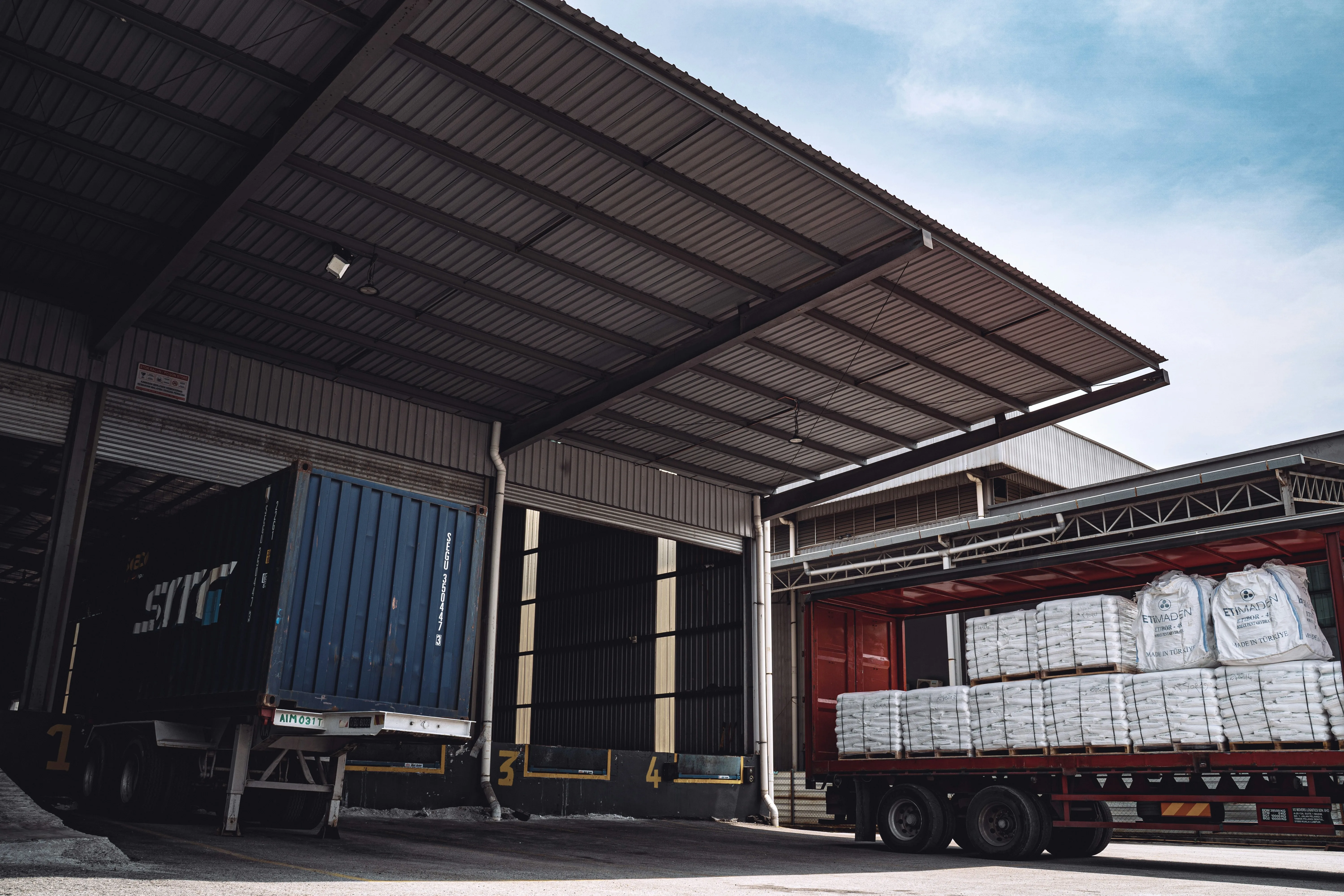
Capabilities Warehousing
Right cargo. Right bay. Right borough.
A multi-borough partner network. Each cargo profile placed where it belongs.
The thesis
Submarket choice is a placement decision. Not a real-estate convenience.
Most 3PLs sell warehousing as floor space.
Pallet positions, square feet, racking systems. The math is square-feet times dollars times month — same equation everywhere, applied to whichever building has capacity. The cargo gets matched to the warehouse the 3PL already pays for, not to the warehouse the cargo actually needs.
NewYork3PL sells warehousing as placement. The cargo profile decides which borough, which submarket, which dock height, which adjacency to the port or the rail terminal or the highway. Pallet positions still cost dollars per month — but the dollars compound differently when the freight is half a mile from where it needs to be versus forty.
A multi-borough partner network — Brooklyn, Queens, Bronx, Staten Island, Northern New Jersey, Lehigh Valley overflow — gives us the submarket inventory to make that placement decision instead of inheriting the default.
Where the freight ends up determines what the freight costs.
The catalog
Seven services. One placement strategy.
The work that happens between freight arriving and freight leaving — across multi-borough partner facilities chosen for each specific cargo profile.
-
Placement-intelligent storage
Multi-borough warehousing
We don't operate a single warehouse and route everything to it. We maintain partner relationships across submarkets so each cargo profile gets matched to the building with the right dock heights, the right ceiling clearance, the right adjacency to port or rail or highway, and the right cost mathematics for that profile.
Brooklyn for last-mile-to-Manhattan inventory. Newark for port-adjacent transload positions. Lehigh Valley for cost-sensitive bulk that doesn't need NYC proximity. Short-term, long-term, and seasonal-overflow capacity available across all submarkets — same accountable team, different submarket math.
Common use cases: Apparel imports requiring fashion-district last-mile (Brooklyn). Pharmaceutical cold-chain requiring 24/7 port access (Newark). Promotional product overflow for a Q4 retail push (Lehigh Valley short-term).
-
Multi-channel inventory operations
Fulfillment & distribution
B2B wholesale, DTC e-commerce, retail replenishment, and omnichannel fulfillment for clients with complex multi-channel inventory flows. Multi-channel platform integration — Shopify, Amazon FBA, retail EDI, marketplace platforms — so a single inventory pool serves wholesale, DTC, and retail without separate stocking tiers.
Same-day and next-day fulfillment available for NYC-local orders, with delivery routing optimized around Manhattan permit windows, Bronx last-mile cost mathematics, and the borough-by-borough delivery rhythm that determines whether 6 p.m. SLAs are achievable or aspirational.
Common use cases: DTC brand expanding from one Shopify storefront to retail wholesale and Amazon — single inventory feed serving all three channels. NYC-local subscription box requiring same-day fulfillment within five-borough delivery radius.
-
Short-dwell, high-throughput operations
Cross-docking
High-velocity cross-dock operations adjacent to Port Newark and JFK Air Cargo, designed for short-dwell freight that doesn't earn its storage cost. Container arrives, gets sorted by SKU or destination, gets loaded onto outbound trailers — typically same-day, often within hours.
Strong fit given the current NYC industrial vacancy environment — the post-pandemic capacity correction created favorable terms for short-dwell, high-throughput arrangements at both PANYNJ-adjacent facilities and JFK perimeter docks. We pass that math through to clients with cargo flows that don't justify long-term storage rates.
Common use cases: Imported retail inventory for a Black Friday push that needs to hit ten regional DCs in under 72 hours. Fashion brand running tight inventory turns where dock-to-truck-to-store is the model. Pharmaceutical manufacturer with time-temperature constraints that reward zero-storage routing.
-
Container-to-trailer at the harbor
Transloading
Container-to-trailer conversion at the harbor — 53-foot and 48-foot domestic trailers — for inland distribution from PANYNJ container terminals. Reduces drayage cost and intermodal handoff time for inland-bound cargo by consolidating maritime container freight into highway-legal trailers at the Newark perimeter.
The transload point is also the natural break to handle re-labeling, customs paperwork transitions, and the documentation handoff between import and domestic shipping regimes. A single 40-foot ocean container can be efficiently distributed across two 53-foot domestic trailers or consolidated into part of one — driven by the cargo profile, not the warehouse contract.
Common use cases: Import shipper running inland to Pennsylvania, Ohio, or further west — transload at Newark, run domestic trucking the rest of the way. Multi-vendor consolidation where four 20-foot containers from different origin ports get combined into one outbound trailer.
-
SKU-level workflow customization
Kitting & assembly
Custom packing, custom bundling, custom inspection, custom labeling — operational workflows that flex to the client's business at the SKU level. The default posture for every engagement (we call it Customer Adapter), not an upcharged premium tier.
Specifically: subscription-box assembly with brand-specific packaging conventions; retail display kitting where a vendor's products plus a third-party POS display ship as a single unit; promotional bundling for seasonal launches; channel-specific repackaging for retail-versus-DTC SKU distinctions; custom inspection protocols for high-value or quality-sensitive cargo.
Common use cases: DTC subscription brand needing custom personalization on each shipment. Furniture company shipping retail display assemblies with mixed components. Beauty brand running channel-specific bundles (DTC, Sephora, Ulta, Amazon) from a single inventory pool.
-
Reverse logistics with closed-loop visibility
Returns processing
Reverse logistics for DTC and retail — inspection, restocking, refurbishment routing, disposition reporting. The closed-loop visibility for clients with complex multi-channel return flows: return arrives, inspector classifies it (sellable, refurbishment-ready, vendor-return, or scrap), and the system updates inventory or pushes the unit to the appropriate downstream workflow without a manual handoff.
Disposition reporting closes the loop with finance and category-management teams: what came back, why, what happened to it, and the unit-economics of each disposition category. Reporting cadence runs weekly for steady-state clients, daily for clients in heavy return cycles (post-holiday, post-launch).
Common use cases: Apparel brand managing DTC returns alongside in-store returns funneled to the warehouse for inspection. Electronics retailer running OEM-vendor refurbishment routing. Furniture brand handling damage claims with photographic disposition documentation.
-
Anticipatory inventory positioning
Forward staging
Pre-positioning inventory closer to the final destination — tighter SLA compliance, faster fulfillment, reduced transit miles. The strategy is anticipatory rather than reactive: instead of waiting for orders and then shipping from a central DC, freight is staged in advance at submarket-proximate positions based on demand forecasts.
Particularly powerful for peak-season scaling and time-critical NYC delivery. A brand with national distribution can stage a percentage of Q4 inventory in NYC-metro warehouses to support same-day or next-day fulfillment SLAs that would be impossible from a centralized fulfillment hub. The inventory carrying cost gets offset by SLA achievement and reduced expedited-shipping spend.
Common use cases: DTC brand scaling for holiday season — three weeks of forward-stage inventory in NYC-metro positions to support December 23 delivery cutoff. Subscription service with monthly cycle deliveries — forward-stage at start of cycle, pull through over the month. B2B distributor supporting NYC retail accounts with daily replenishment SLAs.
The NYC math
158 million square feet of industrial. Five submarkets. One placement decision.
-
158M sq ft
NYC metro industrial inventory
-
5 submarkets
Brooklyn, Queens, Bronx, Staten Island, Northern New Jersey
-
+1 overflow
Lehigh Valley for inland-bound, cost-sensitive cargo
Selectivity matters because the submarkets behave differently. Brooklyn industrial leases at premium rates and gets placed against last-mile-to-Manhattan economics — every square foot earned back through delivery cost reduction. Newark industrial is cheaper per foot but earns through port adjacency: drayage cost savings, customs proximity, transload access. Lehigh Valley is cheapest, but only economic for cargo where NYC proximity isn't worth the rent premium.
The placement decision is the cost decision. For a 50,000-square-foot operation, a wrong-submarket placement can cost six figures annually in incremental drayage, last-mile, or inventory carrying cost. The right placement compounds the same way — every truck that doesn't drive an extra thirty miles every day becomes a margin point.
The right warehouse isn't the cheapest building. It's the building that's half a mile from where the freight needs to go next.
Brief us on your warehousing
Tell us what you're storing. We'll match the submarket.
Cargo profile, volume, SLA. We'll come back with a placement plan and a partner-facility short-list.