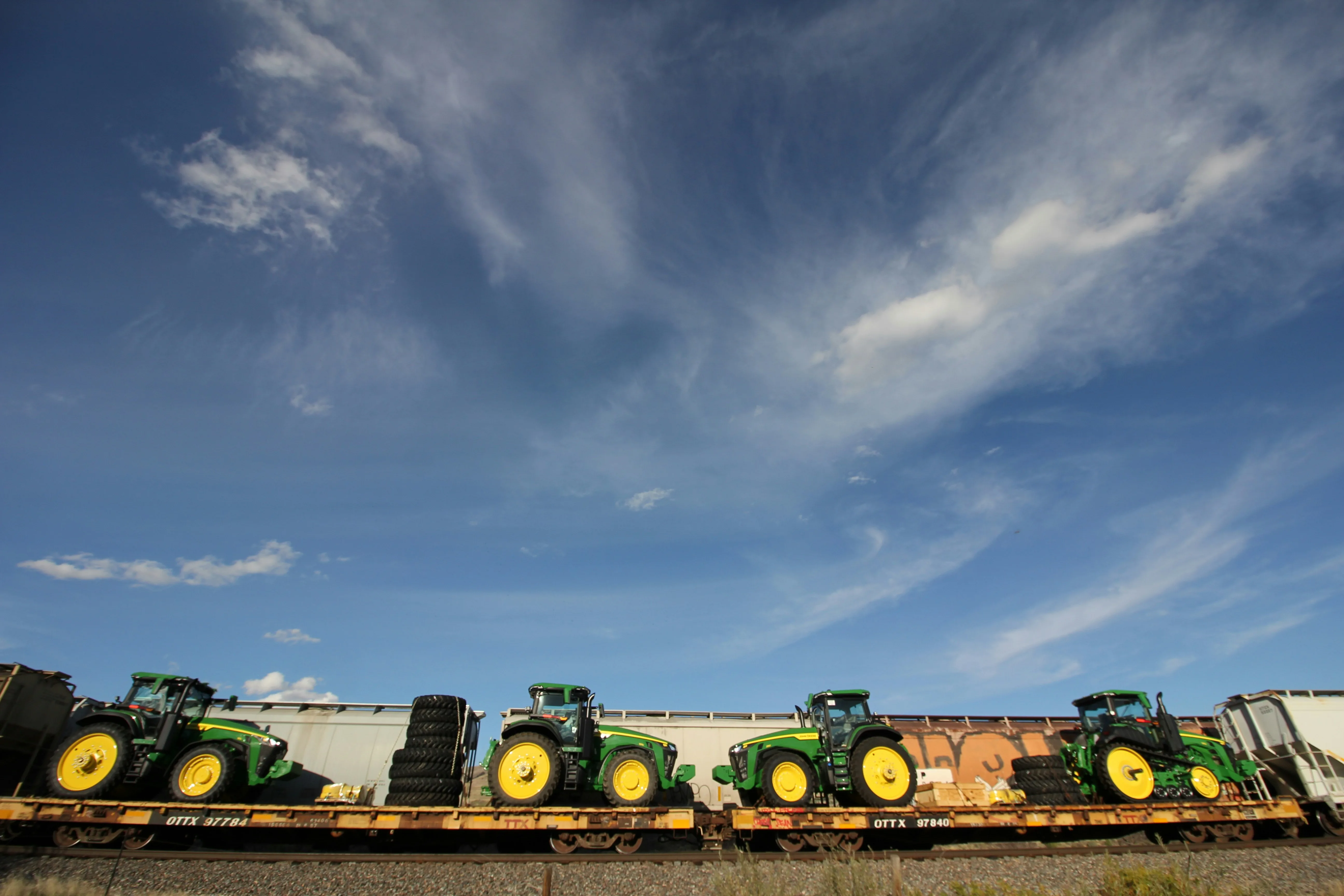
Sectors Machinery & industrial
Capital equipment moves slowly. The decisions don't.
Industrial machinery, semiconductor and aerospace manufacturing equipment, precision tooling, machine tools. German-dominant origins for precision tooling. Project-cargo handling protocols throughout.
The thesis
The freight rate is rarely the constraint. The installation site is.
Machinery imports are different. Low-volume, high-value, often project-cargo with installation requirements that go beyond standard freight.
A semiconductor wafer-fab tool can cost millions of dollars per unit, weigh several tons, require specialized rigging at origin and destination, ship in temperature- and humidity-controlled containers (some sub-systems are vibration-sensitive), and need on-site installation coordination with the customer's facility team. The freight rate is trivial against the cargo value. The risk concentrates at the handoff points: customs clearance, terminal handling, inland transport, and the final installation site.
Origin volume is German-dominant for precision tooling, machine-tools, and high-precision manufacturing equipment — Germany's industrial machinery sector is the global benchmark and exports significantly to Northeast US manufacturers. Japan and South Korea are strong for semiconductor and aerospace manufacturing equipment. Italy is significant for machine tools and specialized industrial equipment. China has grown for industrial machinery, pumps, and compressors as Chinese manufacturers compete on price for less-precision-sensitive sub-classes.
Downstream the cargo flows to manufacturing customers in NJ, PA, and the broader Mid-Atlantic — often with installation-site delivery requirements that include rigging, crane work, and on-site assembly coordination. The shipment doesn't end at the dock door; it ends when the equipment is installed and commissioned.
When the cargo costs millions, the documentation costs nothing.
The cargo class
Six sub-classes. One installation site to deliver to.
Each sub-class concentrates risk at the handoffs — customs clearance, terminal handling, inland transport, on-site installation. The shipment ends when the equipment is installed and commissioned.
-
Pumps, compressors, conveyors
Industrial machinery
Industrial machinery for manufacturing, process industries, water and wastewater, oil and gas, and general industrial applications. Pumps, compressors, conveyor systems, mixers, extruders, packaging machinery. The cargo class spans a wide range of sub-types but shares operational characteristics: high-value containerized or break-bulk freight, customs documentation tied to harmonized HS codes, and inland delivery to manufacturing or installation sites with rigging requirements.
-
Wafer fab, lithography, deposition
Semiconductor manufacturing equipment
Semiconductor manufacturing equipment — wafer-fab tools, photolithography systems, deposition equipment, etch tools, metrology instruments. The most logistics-intensive sub-class in the cargo group. Equipment is high-value-per-unit (often millions of dollars), vibration-sensitive (specialized shock-monitoring during transit), often requires temperature/humidity-controlled shipping, and needs coordinated on-site installation by manufacturer-certified technicians. Northeast destinations include semiconductor research facilities and specialized fabrication sites.
-
Defense, commercial aviation, space
Aerospace manufacturing equipment
Equipment for aerospace component manufacturing, assembly, testing, and qualification — CNC machine tools, composites layup equipment, assembly fixtures, inspection systems, environmental test chambers. Sub-class often involves ITAR, EAR, or controlled-export documentation depending on the equipment's defense-application overlap. Customs and compliance documentation requirements exceed standard industrial machinery imports.
-
German-dominant precision
Precision tooling & machine tools
Precision machine tools — CNC mills, lathes, EDM systems, grinding machines, gear-cutting machinery. German manufacturers (DMG MORI, Trumpf, Heller, Index) dominate the high-precision tier; Italian (Mazak, Mandelli) and Japanese manufacturers (Mazak, Okuma) are also significant. The cargo class flows to precision manufacturing customers in NJ and PA — defense subcontractors, medical device manufacturers, automotive tier-1 suppliers, aerospace component shops.
-
Turbines, transformers, large equipment
Heavy industrial & power generation
Heavy industrial equipment for power generation, transmission, and industrial applications — turbines, generators, large transformers, industrial motors, heavy press equipment. Often project cargo by virtue of size and weight (oversize, overweight). Ships on flat-rack containers, break-bulk vessels, or specialized arrangements. Inland transport requires permits and route surveys for oversize loads.
-
Beyond standard handling
Project cargo / specialized equipment
Custom industrial installations, oversize/overweight equipment, specialized one-off shipments that don't fit a standard cargo profile. Project-managed end-to-end with multi-party coordination — manufacturer engineering, ocean carrier, drayage, oversize trucking, on-site rigging, installation contractors. The cargo class is bespoke logistics: each shipment plans against the specific equipment, the specific destination site, and the specific delivery window.
The Northeast manufacturing corridor
New Jersey, Pennsylvania, Mid-Atlantic — where the machinery actually goes.
-
NJ PA · MD
Northeast manufacturing corridor — primary destination for machinery imports
-
DE origin
Germany dominates precision-tooling and machine-tool imports
-
Project cargo
Many shipments require oversize permits and on-site rigging coordination
New Jersey, Pennsylvania, and the broader Mid-Atlantic remain a significant US manufacturing region — pharmaceuticals, specialty chemicals, defense and aerospace components, medical devices, automotive tier-1 supply, advanced electronics, and precision instrumentation all maintain meaningful manufacturing footprint here. The PANYNJ port complex serves this manufacturing corridor as the primary import gateway for capital equipment from European, Japanese, and Korean origins.
Inland delivery from the port to manufacturing customers often requires oversize-load permits, route surveys, escort services, and coordinated on-site rigging at the destination. The cargo class is project-managed end-to-end rather than handled as repeatable transactional freight — each shipment is planned against the specific equipment specifications, the specific destination facility, and the specific installation schedule. The 3PL\'s role extends beyond freight movement into project coordination.
The cargo arrives. The project starts. The 3PL has to know the difference.
Brief us on the equipment
Tell us where it ships from. Tell us where it installs.
Origin manufacturer, equipment specifications, destination facility, installation timeline. We'll come back with the customs strategy, the inland transport plan, and the on-site coordination.