Sectors Refrigerated cargo
The reefer corridor runs through New York.
Pharmaceutical cold-chain, biotech, fresh produce, frozen seafood, dairy, wine, and spirits. From quay to NYC retail, restaurant, hospital, and distribution. PANYNJ is the #1 US port for refrigerated cargo.
The thesis
Cold-chain isn't a service tier. It's an infrastructure choice.
A break in the chain is a break in the cargo.
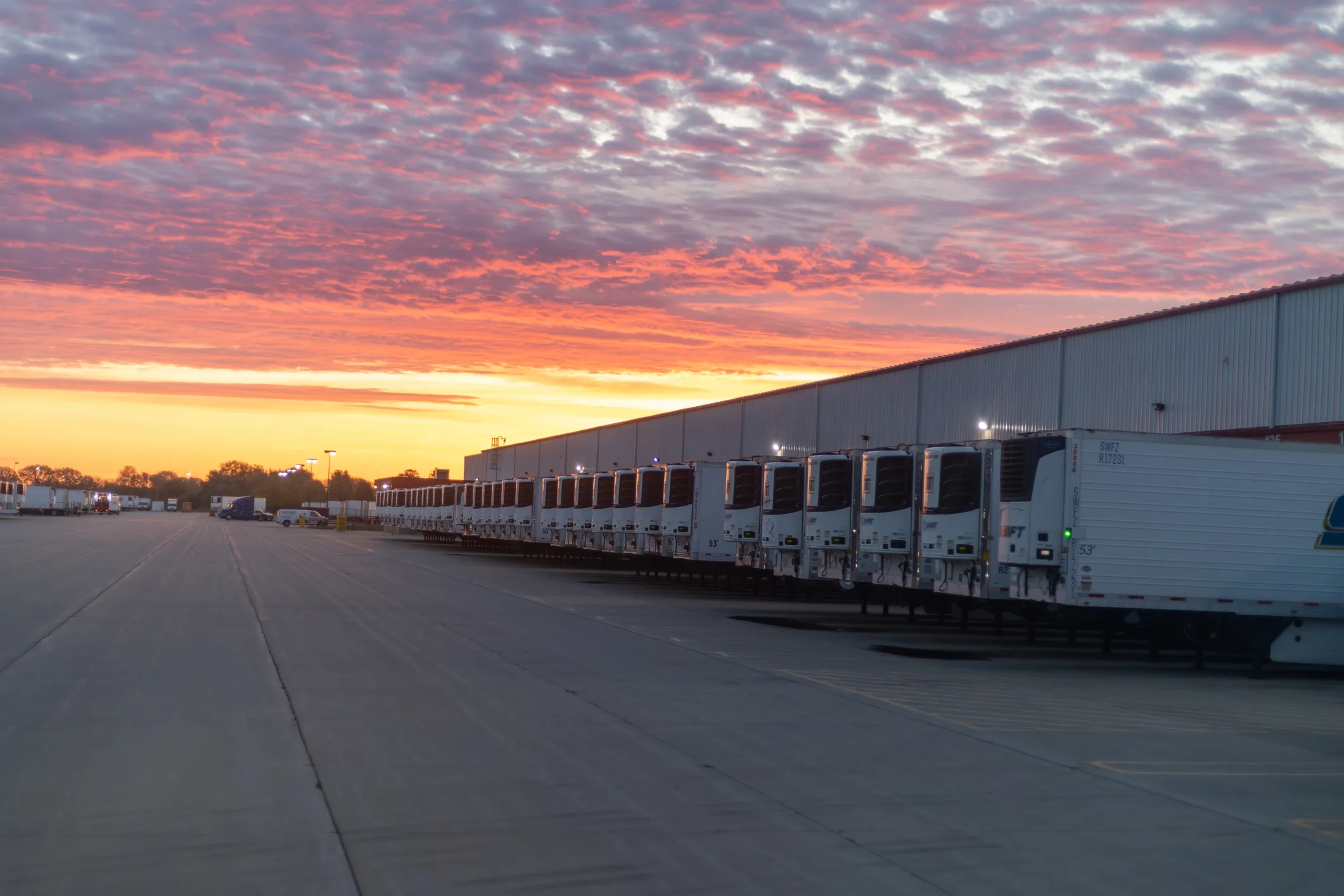
Cold-chain is the discipline of maintaining a cargo's temperature integrity from origin to destination — without breaks, without exceptions. The infrastructure has to exist at every transfer point. A refrigerated ocean container that arrives at PANYNJ with full temperature integrity, then sits on a non-reefer chassis for four hours waiting for inland transport, is no longer a cold-chain shipment. The break ruined it.
We operate the reefer corridor as a continuously-controlled environment. Reefer-specific drayage chassis with continuous power monitoring. Cold-chain partner facilities with multi-zone temperature segregation — frozen, refrigerated, controlled-ambient, dual-temperature. Time-temperature compliance reporting at every transfer point, with documentation that holds up to FDA, USDA, or destination-country regulatory scrutiny depending on which agency the cargo class answers to.
The infrastructure determines what the service can do — not the other way around. The 3PL that doesn't operate cold-chain infrastructure can't deliver cold-chain results, regardless of what the website says.
If the chassis isn't powered, the cargo isn't refrigerated.
The reefer corridor
Seven sub-classes. One continuous chain.
Each sub-class has its own temperature window, regulatory regime, and downstream NYC endpoint. The cold-chain infrastructure is shared; the protocols are tuned to the cargo.
-
FDA-regulated, time-temperature compliance
Pharmaceutical cold-chain
Pharmaceutical reagents, vaccines, biologics, and medical-grade fluids requiring 2–8°C continuous temperature integrity from origin manufacturer to destination hospital, research lab, or pharmacy. The four-hour temperature tolerance window matters: a single break can write off the shipment and trigger insurance and regulatory consequences. NYC research hospitals (Mount Sinai, Memorial Sloan Kettering, Weill Cornell, NYU Langone, Columbia, Hospital for Special Surgery) are major destination endpoints for European and Asian pharmaceutical imports.
-
Strict time windows, regulatory documentation
Biotech sample handling
Cellular materials, tissue samples, blood products, and laboratory specimens with strict time-temperature constraints — often 24-to-72-hour viability windows where minor delays can render samples unusable. The downstream destinations include NYC biotech research clusters (Alexandria Center, NY Genome Center, Tri-Institutional campus) and academic medical centers. Documentation requirements exceed standard pharmaceutical because many sample types are subject to research protocols and IRB oversight.
-
Daily clearance pace, minimal dwell
Fresh produce
Tropical and counter-seasonal produce — Ecuadorian and Costa Rican bananas, Peruvian asparagus and grapes, Mexican avocados and berries, European stone fruit. The operational tempo is daily clearance and immediate distribution to the Bronx Hunts Point Produce Market (the largest wholesale produce market in the country), Brooklyn produce wholesalers, and NYC restaurant supply chains. Dwell time at the port is measured in hours, not days — produce moving through reefer cross-dock to outbound trucking same-day.
-
Atlantic and Pacific origin diversity
Frozen seafood
Frozen finfish, shellfish, and processed seafood from Northern European fisheries (Norway, Iceland, Faroe Islands), Atlantic-coast US sources, Pacific Asian origins (Vietnam, Thailand, Indonesia), and South American salmon farming. Continuous freeze integrity from origin to destination is non-negotiable. Downstream the cargo distributes to the Fulton Fish Market (Bronx), NYC restaurant supply chains, retail grocery, and food-service distribution across the Northeast.
-
Multi-temp tier infrastructure
Dairy & multi-temperature
European specialty dairy (French, Italian, Dutch artisan cheeses), Pacific dairy imports, butter and yogurt requiring stable refrigerated handling, and ice cream / frozen desserts requiring deep-freeze. Multi-temperature container arrangements where a single shipment carries cargo at different temperature requirements are common — and require partner facilities with multi-zone segregation rather than a single uniform-temperature warehouse.
-
Climate-stable storage, NYC retail and restaurant
Wine
Wine imports requiring climate-stable storage (typically 55-65°F, controlled humidity) from European wine regions (France, Italy, Spain, Germany, Portugal) and emerging-region origins (South America, South Africa, Australia, New Zealand). Bottle integrity requires gentle handling and stable temperature throughout the supply chain — temperature swings degrade wine quality measurably. Downstream the cargo distributes to NYC retail wine shops, restaurant wine programs, and broader Northeast wholesale distribution.
-
Duty-paid storage, NYC distribution
Spirits
Imported spirits — Scotch and Irish whisky, French cognac and armagnac, tequila and mezcal from Mexico, Caribbean and Central American rum, Eastern European vodka, Japanese and Asian whisky. Spirits handling combines temperature stability requirements (less critical than wine but still relevant) with duty and excise tax considerations — bonded warehouse storage to defer duty payment, FTZ routing where the math supports it, and TTB compliance documentation. Downstream the cargo distributes to NYC restaurant and bar programs, retail liquor stores, and broader Northeast spirits wholesale.
The infrastructure
The reefer corridor is real infrastructure, not a marketing claim.
-
#1 US port
Refrigerated container throughput across all US ports
-
24/7 access
Cold-chain handling across the reefer corridor
-
4 temp tiers
Frozen, refrigerated, controlled-ambient, dual-temperature
PANYNJ moves more refrigerated container volume than any other US port — a position driven by NYC's concentrated downstream demand (hospitals, retail, restaurants, distributors) and by the port's reefer-specific terminal infrastructure at Port Newark and Howland Hook. The reefer corridor connects port-side refrigerated container handling to NYC-metro cold-chain partner facilities through a dedicated chassis pool with continuous-power monitoring, so the cargo never breaks chain in transit.
Cold-chain partner facilities operate four temperature tiers — deep frozen for seafood and frozen prepared foods, refrigerated for produce and dairy, controlled-ambient for wine and pharmaceutical room-temperature requirements, and dual-temperature segments for multi-temp shipments. Time-temperature compliance documentation runs at every transfer point, with reporting tuned to the regulatory regime each cargo class answers to (FDA, USDA, TTB, destination-country authorities).
The chain holds because the infrastructure does. Not because the website says it does.
Brief us on the cold-chain
Tell us the temperature window. We'll keep it.
Cargo class, temperature requirement, regulatory regime, NYC endpoint. We'll come back with the chassis, the facility, and the compliance-reporting plan.