Sectors Vehicles & ro-ro
From the ramp to the dealer.
Port Authority Auto Marine Terminal — the East Coast's primary vehicle import gateway. Premium European autos, Japanese passenger vehicles, fast-growing EV imports from Asia, and commercial vehicles for Northeast fleet customers.
The thesis
Vehicle import isn't container freight. It's its own infrastructure.
The cars don't sit in containers. They drive on, they drive off.
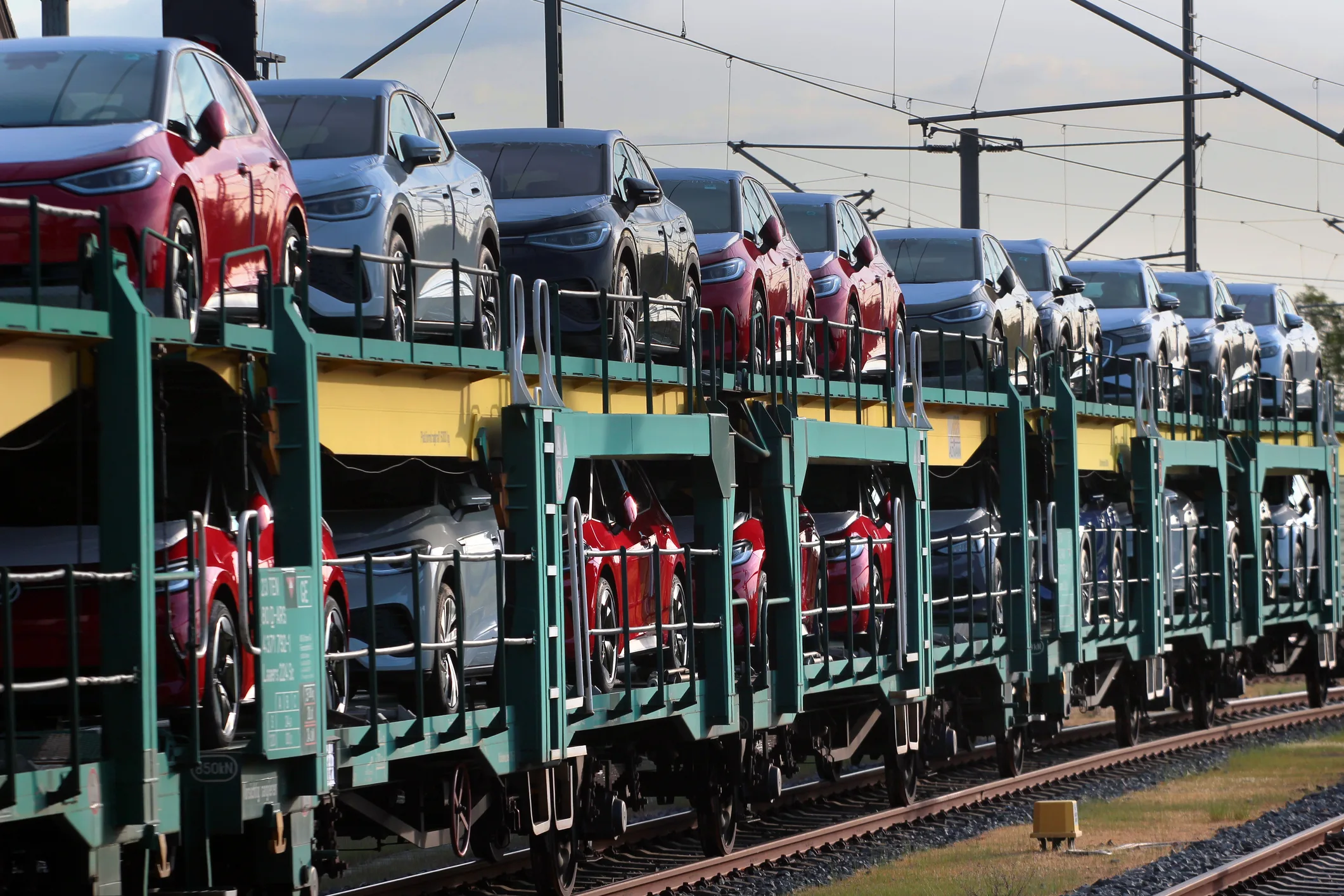
Vehicle import operates on a fundamentally different infrastructure than containerized cargo. The Port of New York and New Jersey runs the Port Authority Auto Marine Terminal — purpose-built ro-ro (roll-on/roll-off) infrastructure where vehicles drive directly off specialized vessels, are processed through customs and pre-delivery inspection (PDI), and then load onto auto-haul carriers for distribution to dealer networks across the Northeast. There is no drayage chassis. There is no container terminal. The freight handling is fundamentally different.
Origin volume is built on premium European auto brands (German luxury, Italian sports, Swedish premium) and Japanese passenger autos — the historical baseline of US vehicle import. The fastest-growing sub-segment is EV imports from Asian manufacturers, which add new operational requirements: battery handling protocols, charging logistics for pre-delivery, heightened HazMat documentation for lithium-ion battery shipments under IMDG and DOT regulations. The cargo class is evolving in real time as the EV transition accelerates.
Downstream of the Auto Marine Terminal, vehicles distribute to dealer networks across the Northeast through specialized auto-haul carriers — open and enclosed transport, depending on vehicle value and condition requirements. Commercial vehicles flow through the same terminal but with different downstream routes toward Northeast fleet and rental customers. Heavy machinery and project cargo on ro-ro vessels require specialized handling at both terminal and destination.
A container is freight infrastructure. An auto terminal is its own.
The cargo class
Six sub-classes. One terminal infrastructure.
Each sub-class shares the Port Authority Auto Marine Terminal but flows downstream to different customer types — luxury dealers, mass-market dealers, fleet operators, EV-specific networks, industrial sites.
-
German, Italian, Swedish, British
European premium passenger
Premium European passenger vehicles — German luxury (Mercedes-Benz, BMW, Audi, Porsche), Italian sports and luxury (Ferrari, Lamborghini, Maserati), Swedish premium (Volvo, Polestar), British luxury (Bentley, Rolls-Royce, Jaguar Land Rover). Cargo characteristics include high value-per-unit driving condition-protection protocols (enclosed transport for high-end models), specific dealer-handoff documentation, and pre-delivery inspection requirements that differ by manufacturer.
-
Mass-market plus premium
Japanese passenger vehicles
Japanese passenger autos from Toyota, Honda, Nissan, Mazda, Subaru, plus Lexus, Acura, Infiniti, and Genesis on the premium tier. Long-established import flows with mature dealer-network distribution. Cargo characteristics are tuned for high-volume efficiency rather than per-unit specialization. Vessel rotations from Japanese ports are scheduled and predictable, which makes lane-planning and dealer-allocation forecasting more reliable than for some other origin regions.
-
Battery handling, HazMat documentation
EV imports
The fastest-growing sub-segment in the cargo class. Asian EV manufacturers — Hyundai, Kia, Genesis (Korean); BYD and other Chinese brands; new Japanese EV platforms — drive the majority of growth. EV imports add operational requirements that traditional vehicle import doesn't face: battery handling protocols at every transfer, charging logistics for pre-delivery (vehicles need state-of-charge management during dwell), and heightened HazMat documentation for lithium-ion battery shipments under IMDG (UN 3171, UN 3536) and DOT regulations. The cargo class is changing how the Auto Marine Terminal operates.
-
Work trucks, vans, cargo vans
Commercial vehicles & fleet
Commercial vehicles imported for fleet, rental, and work-truck applications — passenger vans, cargo vans, light commercial trucks, specialty work vehicles. Downstream destinations differ from passenger vehicles: less retail dealer focus, more direct delivery to fleet customers, rental fleet operators, and commercial truck up-fitters who modify the base vehicle for specific work applications.
-
Construction, agricultural, mining equipment
Heavy machinery on ro-ro
Self-propelled heavy equipment that loads via ro-ro rather than containerized shipping — construction equipment (excavators, loaders, graders), agricultural equipment (tractors, harvesters), mining and industrial equipment. The cargo class shares Auto Marine Terminal infrastructure with vehicles but requires different handling: heavier weight tolerances, specialized lashing and securing, and downstream auto-haul carriers rated for the weight class.
-
Beyond standard ro-ro
Project cargo / oversize
Vehicles and equipment that exceed standard ro-ro vessel parameters — oversize, overweight, or with non-standard handling requirements. May require flat-rack, break-bulk, or specialized vessel arrangements rather than scheduled ro-ro service. Cargo characteristics include extensive pre-shipment planning, specialized rigging at both origin and destination, and coordinated multi-party documentation.
The infrastructure
The Auto Marine Terminal is purpose-built infrastructure. Not retrofitted container handling.
-
PA Auto Marine
Port Authority Auto Marine Terminal — primary East Coast vehicle import gateway
-
EV fastest growing
EV imports are the fastest-growing sub-segment in vehicle import
-
NE dealer reach
Northeast dealer-network distribution through specialized auto-haul carriers
The Port Authority Auto Marine Terminal in Newark is purpose-built ro-ro infrastructure — vessel berths designed for ro-ro vessel ramps, processing yards sized for vehicle staging and pre-delivery inspection (PDI), and direct loading lanes onto auto-haul carriers. The terminal handles the majority of East Coast vehicle imports and operates as a coordinated facility rather than as a generic cargo terminal that vehicles happen to flow through.
EV imports are reshaping the terminal's operations. State-of-charge management during dwell, charging-equipped staging zones, lithium-ion battery HazMat documentation under IMDG and DOT, and updated handling protocols for vehicles whose lithium-ion battery represents both a fire-safety consideration and a high-value component to protect. The terminal is upgrading capability in real time as the EV transition accelerates from a niche segment to a major share of import volume.
The vessel ramp is the start. The dealer's lot is the end. Everything between is the work.
Brief us on the vehicles
Tell us where they're coming from. We'll get them to the dealer.
Origin port, vessel schedule, vehicle profile (passenger, EV, commercial, oversize), dealer-network destination. We'll come back with the terminal handling and the auto-haul plan.