Sectors Specialty & multi-category
When the cargo doesn't fit a standard bucket.
Plastics and resins (Northeast top 3 nationally), building materials and stone, automotive parts, toys, specialty chemicals with HazMat documentation, agricultural commodities, and project cargo requiring custom routing decisions.
The thesis
The catch-all isn't a leftover. It's a discipline.
When the cargo doesn't fit a standard bucket, the routing decision has to be customized rather than forced into a generic shipping plan.
The specialty cargo class exists because freight doesn't always fit a clean category. Multi-vendor consolidation, project cargo, niche commodities, hazardous materials with regulatory frameworks — each gets a custom routing decision rather than being squeezed into a workflow built for a different cargo class. The 3PL that treats specialty cargo as an inconvenience handles it badly. The 3PL that builds discipline around the irregular handles it well.
Each sub-class has its own operational profile. Plastics in dry containers from China and the Middle East — high volume, commoditized rates, but with HS classification considerations that affect duty exposure. Stone and tile from Italy and Turkey — heavy weight, fragile finish, careful handling. Specialty chemicals with regulatory and HazMat requirements — IMDG, IATA DG, DOT documentation by sub-class. Project cargo on flat-rack or break-bulk vessels with specialized rigging at the terminal. The taxonomy converges on one principle: the cargo decides the protocol, not the warehouse contract.
The Northeast US is in the top 3 nationally for plastic-resin imports — the cargo class flows through PANYNJ at meaningful volume to manufacturing customers, packaging converters, and resin distributors. Italian and Turkish stone imports flow to NYC architectural and construction-finish projects. Specialty chemicals route to pharmaceutical, cosmetics, and specialty-manufacturing customers. The "specialty" label disguises real volume across distinct, identifiable sub-flows.
If the cargo doesn't fit the usual bucket, the bucket isn't the problem.
The cargo class
Seven sub-classes. Seven custom routing decisions.
The "specialty" label hides real volume across distinct, identifiable sub-flows — each with its own regulatory framework, handling protocol, and downstream destination type.
-
Northeast top 3 nationally
Plastics & resins
Polyethylene, polypropylene, PVC, PET, polystyrene, and engineering resins flowing through Port Newark in dry containers and bulk-bag arrangements. The Northeast is among the top 3 US regions for plastic-resin imports, driven by manufacturing converter demand and packaging-industry consumption. HS classification matters — different resin types and polymer compounds carry different duty rates, and accurate classification affects the cost basis for downstream manufacturing customers.
-
Architectural and construction-finish
Building materials & stone
Natural and engineered stone, ceramic and porcelain tile, architectural finishing materials. Italian and Turkish stone — marble, travertine, granite — flows to NYC architectural projects (high-end residential, hospitality, commercial). Spanish and Italian tile imports serve both retail showrooms and project-based commercial construction. Cargo characteristics include heavy weight, fragile finish surfaces, and packaging that protects through ocean transit and inland delivery to project sites.
-
Aftermarket and OEM supply
Automotive parts & components
Automotive parts and components — both OEM-supply (parts feeding into vehicle assembly or dealer-warranty service) and aftermarket distribution (parts for independent repair shops and consumer purchase). High-SKU diversity, mixed-pallet shipments common, and HS classification work for accurate duty exposure. The cargo class flows to NJ-and-Mid-Atlantic automotive distributors, parts wholesalers, and dealer-network parts depots.
-
Seasonal cycles, retail-distributed
Toys & sporting goods
Children's toys, board games, sporting goods, outdoor recreation equipment, fitness and athletic gear. The cargo class is highly seasonal — concentrated Q4 holiday volume for toys, spring-summer growth for outdoor and sporting goods. CPSC product-safety regulations create documentation requirements for children's products specifically (lead testing, age-appropriate certifications, choking-hazard labeling). China remains the dominant origin for toys; sporting goods diversify across Vietnam, Thailand, and Mexico.
-
HazMat documentation, regulatory frameworks
Specialty chemicals
Specialty chemicals — pharmaceutical intermediates, cosmetic and personal-care raw materials, food-grade ingredients, industrial cleaning chemicals, and specialty-manufacturing chemicals. Many sub-classes are subject to HazMat regulatory frameworks: IMDG for ocean transport, IATA DG for air, DOT and EPA regulations for inland transport. Documentation accuracy is non-negotiable — mis-classified hazardous shipments can result in vessel-loading refusals, customs holds, or post-import EPA enforcement.
-
Bulk imports and specialty agricultural
Agricultural commodities
Agricultural commodities — coffee, cocoa, specialty grains, nuts, vegetable oils, sugar, and other plant-derived products. Some flow as bulk commodity (coffee, cocoa); some as specialty-agriculture imports (organic, fair-trade, specialty-origin) with documentation requirements that exceed bulk commodity. USDA and FDA documentation requirements apply throughout, and some sub-classes (organic, kosher, halal) carry certification-chain requirements that the customs entry has to support.
-
Custom routing, multi-party coordination
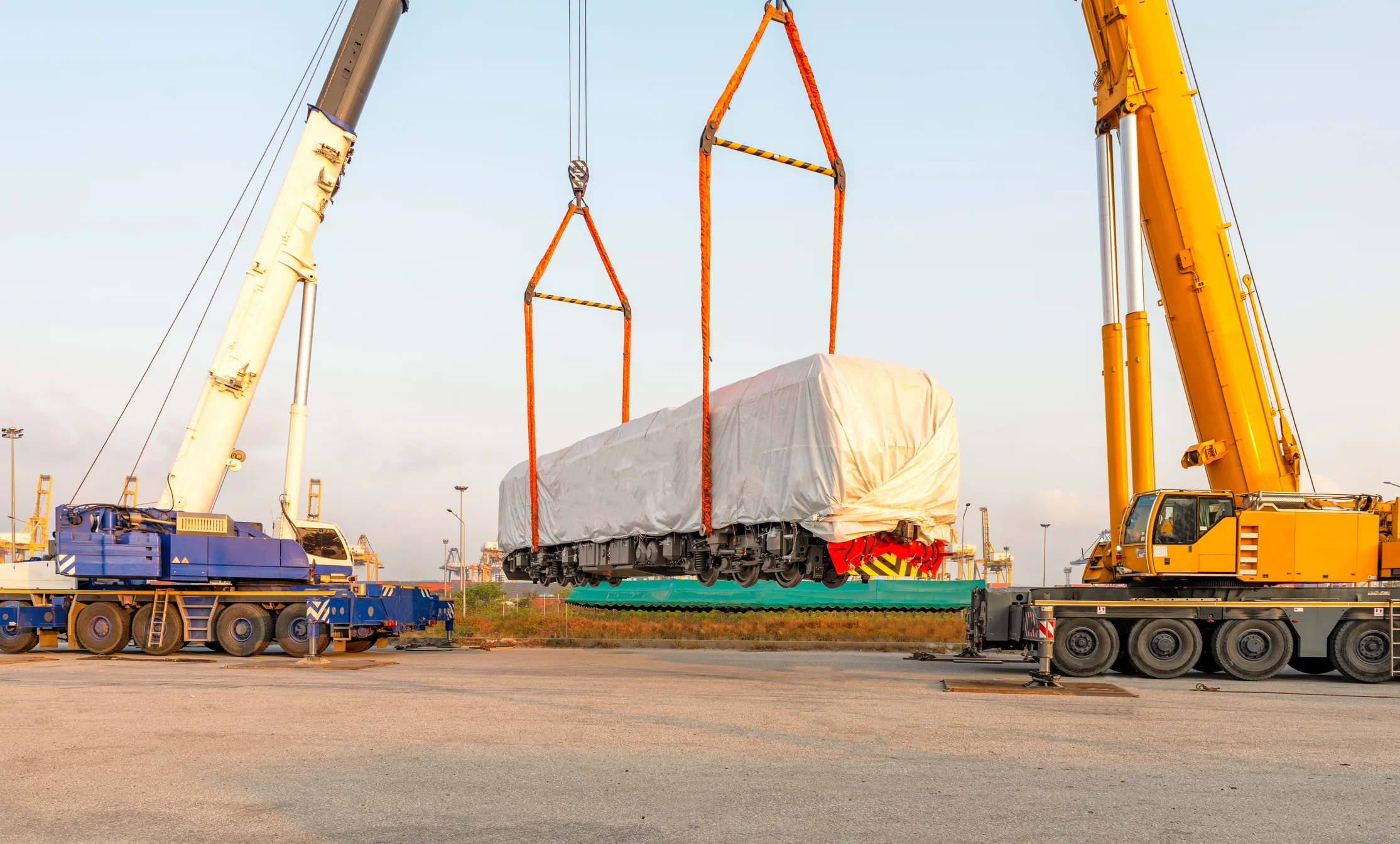
Project cargo
Cargo that doesn't fit standard containerized shipping — oversize, overweight, or with non-standard handling requirements. Industrial installations, infrastructure project equipment, oversized prefabricated structures, specialty one-off shipments. May ship on flat-rack containers, break-bulk vessels, or specialized arrangements. Inland transport requires permits, route surveys, and on-site rigging coordination at the destination. The cargo class is bespoke logistics — each shipment plans against the specific equipment, the specific destination, and the specific delivery window.
The catch-all that isn't catch-all
Real volume, real regulatory complexity, and real custom-routing discipline.
-
Top 3 nationally
Northeast US is among the top 3 regions for plastic-resin imports
-
Multi regulatory
IMDG, IATA DG, DOT, EPA, FDA, USDA, CPSC frameworks across sub-classes
-
Custom routing
Each sub-class plans against specific cargo, destination, regulatory regime
The specialty cargo class disguises real, distinct sub-flows under a single label. Plastics and resins move at high volume into Northeast manufacturing converters and packaging-industry buyers. Italian and Turkish stone routes to NYC architectural and high-end residential construction. Specialty chemicals serve pharmaceutical, cosmetics, and specialty-manufacturing customers under multiple HazMat regulatory frameworks. Project cargo bypasses standard containerized shipping entirely with bespoke routing and on-site rigging. Each sub-class operates as its own focused logistics workflow.
The discipline that ties them together is the willingness to design the routing decision against the specific cargo rather than fitting the cargo to a standard shipping plan. The catch-all label is a tell — the cargo class exists because freight doesn\'t always conform to clean buckets, and the 3PL\'s job is to make the irregular workable, not to push it back to the customer as too complicated to handle.
The cargo decides the protocol. The protocol decides the route. The route gets it where it needs to go.
Brief us on the irregular freight
Tell us why it doesn't fit a standard bucket. We'll design the routing around it.
Cargo class, regulatory framework, origin and destination specifics, handling constraints. We'll come back with the custom routing and the documentation plan.